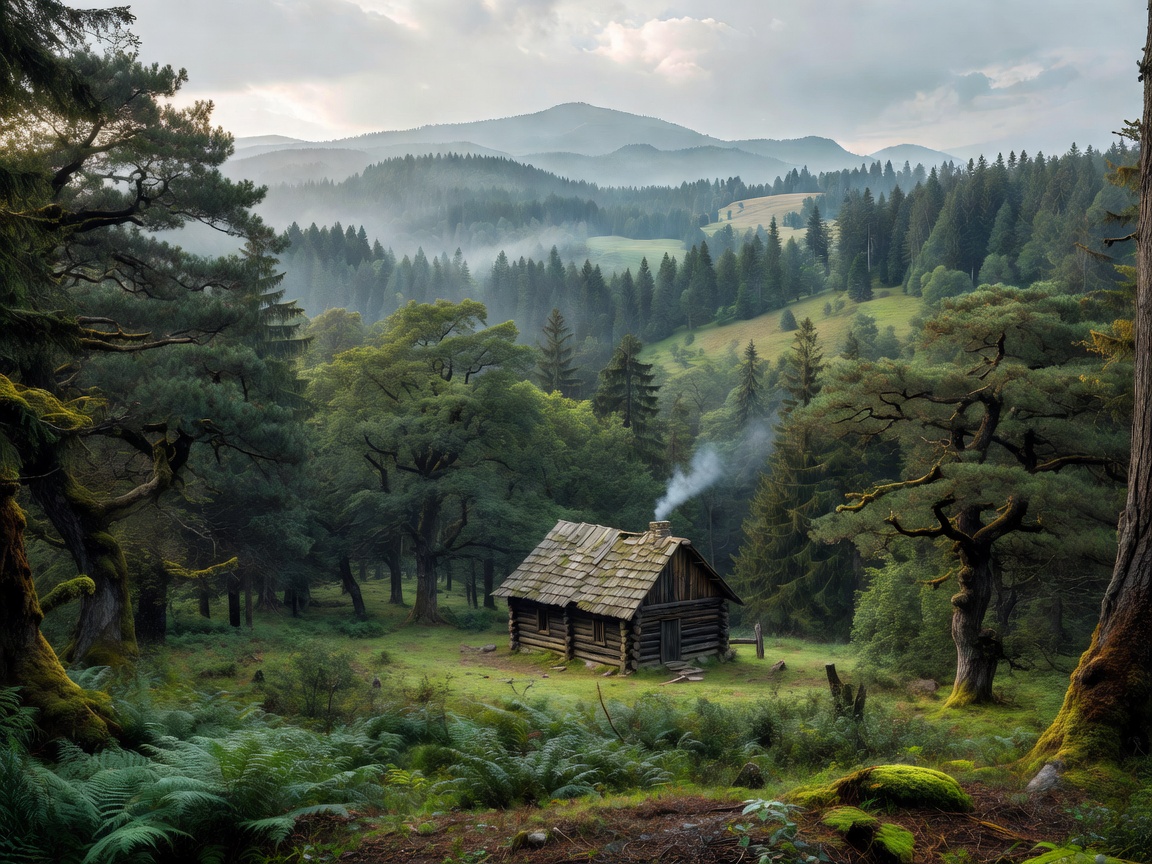
Start with the landscape
Nordic forests usually bring long distances, extensive woodland, lakes and a strong seasonal contrast. Cabins may be widely separated, with access determined by gravel roads, private tracks or short walks from a parking point. The practical advantage is space and quiet. The limitation is a smaller nearby service network and greater dependence on preparation.
Baltic woodland can combine pine, birch, wetlands and lake country. Routes may feel less alpine but can still become soft or difficult after rain. Architecture often ranges from straightforward timber structures to compact modern cabins. Check the exact road surface, mobile coverage and water arrangement rather than assuming that a forest setting means full remoteness.
Mountain and central forest environments
Central European forests often sit closer to villages, farms and established trail systems. This can make supplies and emergency support easier to reach, while popular valleys may have more traffic and less privacy. Terrain changes quickly around foothills, so a cabin that appears close to a road may still require a steep or uneven final approach.
Alpine forest regions combine altitude, slopes, snow exposure and changing weather. A forest cabin below the tree line can offer shelter from open mountain conditions, but access may still depend on gradients, winter equipment and local road rules. Confirm whether the final route is maintained, whether parking is usable in the intended season and whether the accommodation provider gives specific arrival instructions.
Carpathian landscapes can feel deeply wooded and rural, with varied road standards and a wider mix of traditional timber construction and newer architecture. The benefit is a strong sense of landscape. The limitation is that service availability and route information may be less uniform. Allow time for navigation and do not treat mapping-app estimates as property-specific instructions.
Lake and northern wilderness zones
Lake-and-forest regions are attractive for paddling, walking and low-density stays. They also introduce moisture, insects, slippery access points and changing water conditions. Ask about the distance between parking and shoreline, storage for wet equipment and any restrictions around fires or water collection.
Comparison at a glance
Nordic: space and long trails. Baltic: mixed woodland and lakes. Alpine: terrain and mountain access. Central Europe: services and established routes.
Labels are broad. Verify road access, seasonal restrictions, heating, water, connectivity and the nearest practical services for the specific stay.