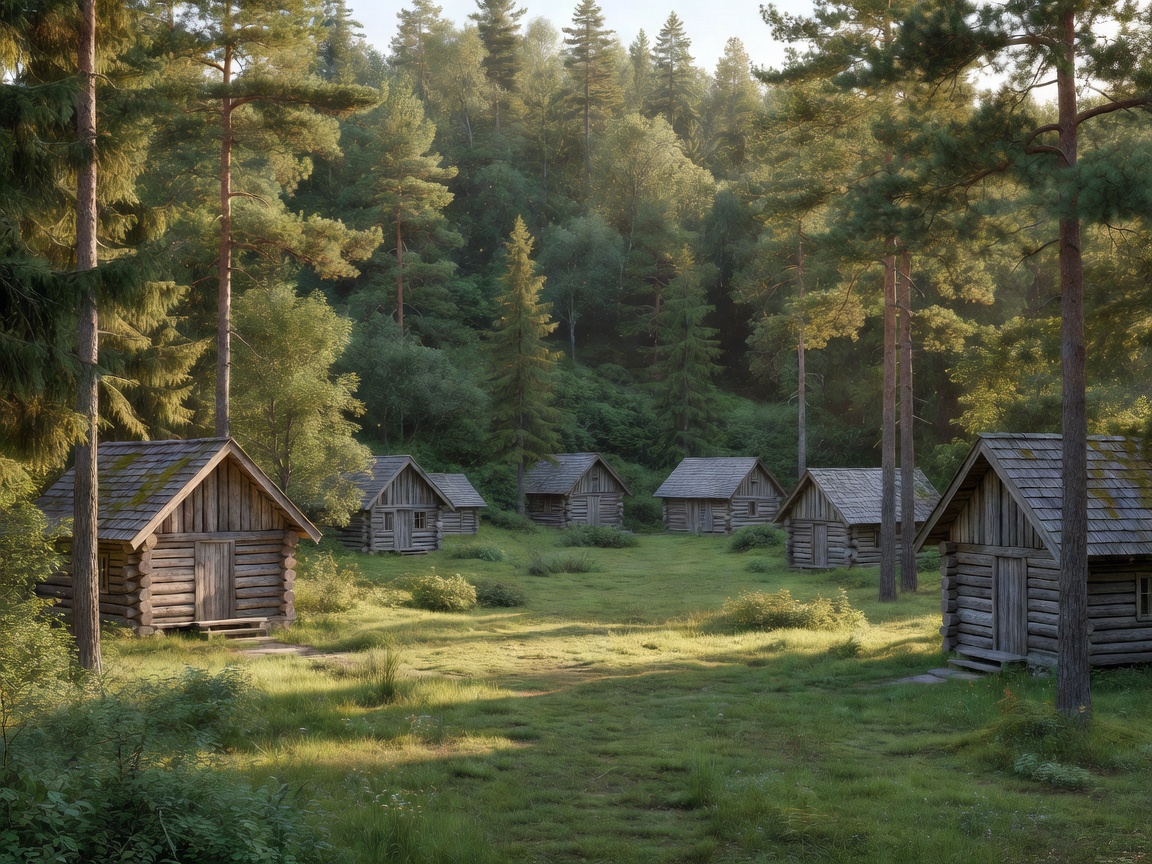
Woodland cabins
Woodland cabins are the broadest category. They may sit near a maintained road or at the end of a track, and their facilities range from simple to highly equipped. Their main advantage is flexibility: many work for walking, reading and short nature breaks. Their limitation is that the word woodland says little about road quality, privacy or winter access.
Lakeside cabins
Lakeside properties suit visitors who value water access, paddling or quiet views. Consider moisture, insects, shoreline safety and storage for wet clothing. A waterside position does not automatically mean easy access; the final approach may be narrow, steep or shared. Ask how close the parking is and whether the route changes with weather.
Mountain forest cabins
These cabins offer forest shelter with slopes, elevation change and possible snow conditions. They can be excellent bases for walking, but access may require a suitable vehicle or a longer approach on foot. Heating performance, drying space and secure storage become more important as conditions become colder and wetter.
Off-grid and compact wilderness cabins
Off-grid cabins may use solar power, batteries, wood heat, private water systems or composting toilets. Compact interiors can be efficient, but every resource has limits. Confirm how water is supplied, how waste is handled, what happens during low light or poor weather and whether charging personal devices is realistic. Do not assume that “off-grid” means unsupported or unsafe; it means the systems require more attention.
Traditional timber and modern architectural cabins
Traditional timber buildings can provide robust construction, generous porches and familiar heating systems. Modern architectural cabins may use efficient envelopes, large windows and compact planning. Neither style guarantees comfort. Evaluate insulation, ventilation, sleeping layout, cooking facilities and the relationship between the building and its access route.
Comparison checklist
- Access: road, parking, walking distance and seasonal restrictions.
- Privacy: nearby buildings, shared tracks and sightlines.
- Systems: heating, water, electricity and waste handling.
- Comfort: beds, cooking space, drying area and storage.
- Winter: route maintenance, daylight, insulation and equipment.
Choose a compact cabin for low-impact simplicity, a lakeside cabin for water-based days, or a mountain forest cabin for trail access and terrain.
Category names are not specifications. Verify property details directly before committing to travel.