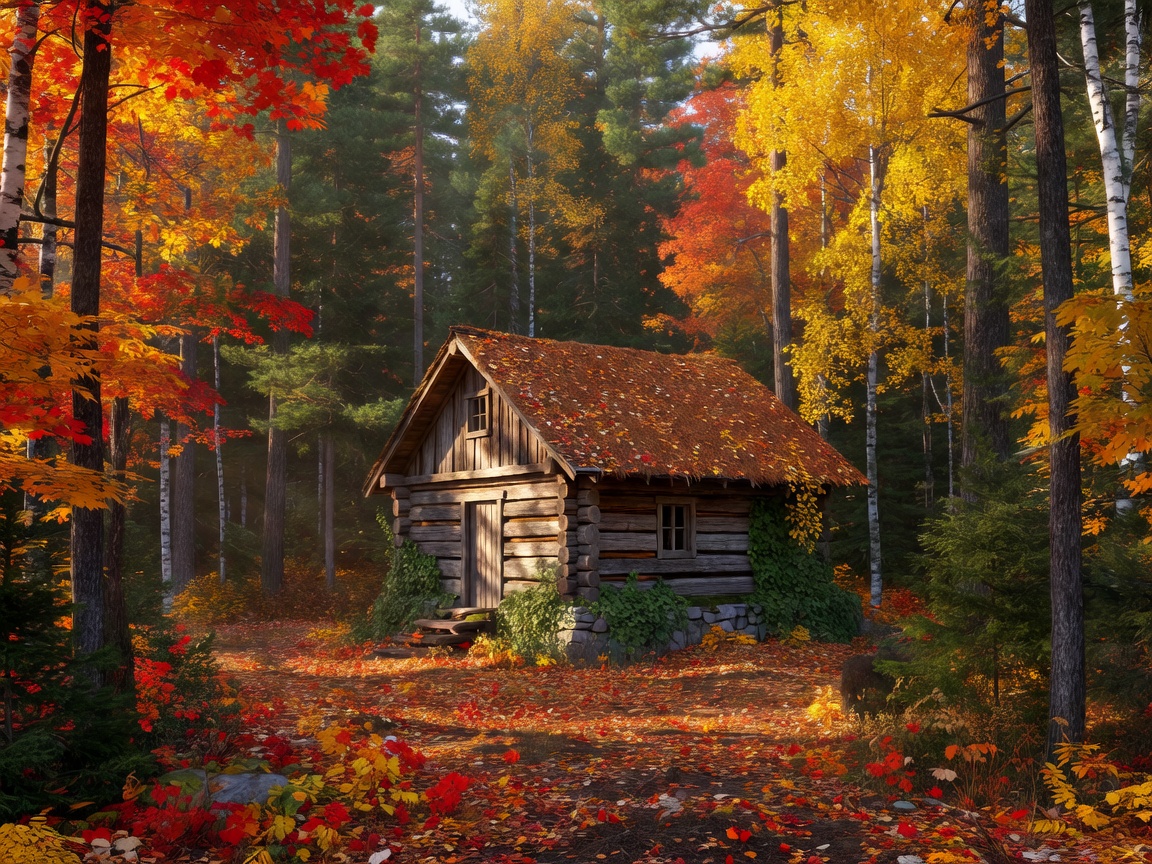
Spring: wet routes and changing conditions
Spring brings longer daylight but can leave trails muddy, soft or interrupted by standing water. Meltwater and rain affect forest roads, steps and parking areas. Pack waterproof layers and footwear that can handle uneven ground. Check whether heating remains available and how the cabin manages damp clothing.
Summer: easier access, more activity
Summer often offers the simplest walking and driving conditions, but not every route is easy. Longer daylight supports trail time, while warmth can increase insects and indoor heat. Ask about ventilation, screens, shade and water arrangements. Popular periods can also place more people on nearby trails, even where the cabin itself feels secluded.
Autumn: moisture, foliage and shorter days
Autumn combines strong woodland colour with faster changes in weather and daylight. Wet leaves can make paths slippery, and evening temperatures may require dependable heating. Pack a headlamp, spare layers and a plan for drying boots. Confirm check-in timing if the final route is difficult to identify after dark.
Winter: the access system matters
Snow and ice can change a short drive into a complex arrival. Road clearance, gradients, parking and walking surfaces should be verified close to travel. Limited daylight affects navigation and outdoor plans. Heating capacity, fuel storage, indoor drying space and power reliability become central. Use any equipment required by the provider and follow local travel warnings.
Seasonal comparison
Spring suits flexible walkers; summer suits longer outdoor days; autumn suits quiet woodland observation; winter suits visitors prepared for limited daylight and more involved access.
Weather varies by location and year. Do not use general seasonal patterns as a substitute for a current forecast or provider instructions.
Before confirming a stay
- Check the access route for the exact dates and vehicle requirements.
- Confirm heating, fuel, water and drying facilities.
- Plan daylight-aware arrival and carry reliable lighting.
- Review local warnings and follow official safety guidance.
- Ask what changes during the intended season.